
Why Your 2-Year-Old Child is Smarter Than AI
According to Alison Gopnik, a world-renowned developmental psychologist at UC Berkeley, that messy, loud, and often baffling 2-year-old is actually running circles around the most advanced Artificial Intelligence on the planet.
While Silicon Valley spends billions trying to make AI “think,” your child is already doing things a supercomputer can only dream of. Here’s why:
Children Act as “Lantern,” AI Acts as “Spotlight”
AI is designed to be a spotlight. It’s built for “exploitation”: taking a specific goal and finding the most efficient path to get there. It ignores everything else to stay on task.
Your toddler, however, is a lantern. In her book The Gardener and the Carpenter (2016), Gopnik explains that children’s consciousness doesn’t focus narrowly, it illuminates everything at once. When they get “distracted” by a tiny ant on the sidewalk while you’re rushing to daycare, that isn’t a bug (pun intended) in their system, it’s a feature. They’re absorbing a massive amount of data about the world that an AI would simply filter out as “noise.”
This diffuse attention isn’t random. Gopnik’s research in The Scientist in the Crib shows that babies and toddlers are actually conducting sophisticated experiments on the world around them. That’s why uninterrupted, exploratory play is crucial for their brain development.
Childhood Is the “R&D” Department of Humanity
Gopnik describes childhood as the Research and Development (R&D) phase of the human species.
Adults are the Production Team: We’re wired to be fast, efficient, and reliable. Our brains have been pruned and specialized to excel at specific tasks.
Toddlers are the Scientists: They’re wired for “high-temperature” exploration, trying out wild hypotheses and testing unlikely possibilities.
When your child throws their bowl of pasta on the floor for the fifth time, they aren’t just testing your patience: they’re conducting a physics experiment on gravity, fluid dynamics, and social cause-and-effect. In her TED Talk “What Do Babies Think?” Gopnik reveals that even babies as young as 15 months old can run sophisticated statistical analyses about probability and make logical inferences that would impress a scientist.
The key difference? AI learns from existing data (the past). Children learn by intervention, creating new data through play, exploration, and yes, even that pasta-throwing.
Innovation Over Imitation
AI like ChatGPT is essentially a “cultural technology.” It’s a master of imitation, it looks at everything humans have already written and predicts the most likely next word. While impressive, AI fundamentally works by pattern-matching against the past.
A 2-year-old, however, is a master of innovation. Gopnik’s studies show that children are actually better than adults (and certainly better than AI) at coming up with highly unlikely, creative explanations for how a new object, tool, or toy works. When faced with a novel problem, adults tend to apply known solutions. Children don’t just follow the most likely path: they imagine “what if?”
As Gopnik describes in The Gardener and the Carpenter, this is why the “carpenter” approach to parenting (trying to shape children into a specific end product) misses the point. Children aren’t meant to be molded: they’re meant to explore, experiment, and discover in their own unpredictable ways.
The Takeaway for Parents
AI isn’t a tool that will replace human intelligence anytime soon because it fundamentally cannot innovate the way children do. AI is busy summarizing the past; children are busy inventing the future.
Parents don’t need to worry about their children “keeping up” with technology. Technology is still trying to catch up to the sheer, messy genius of human childhood.
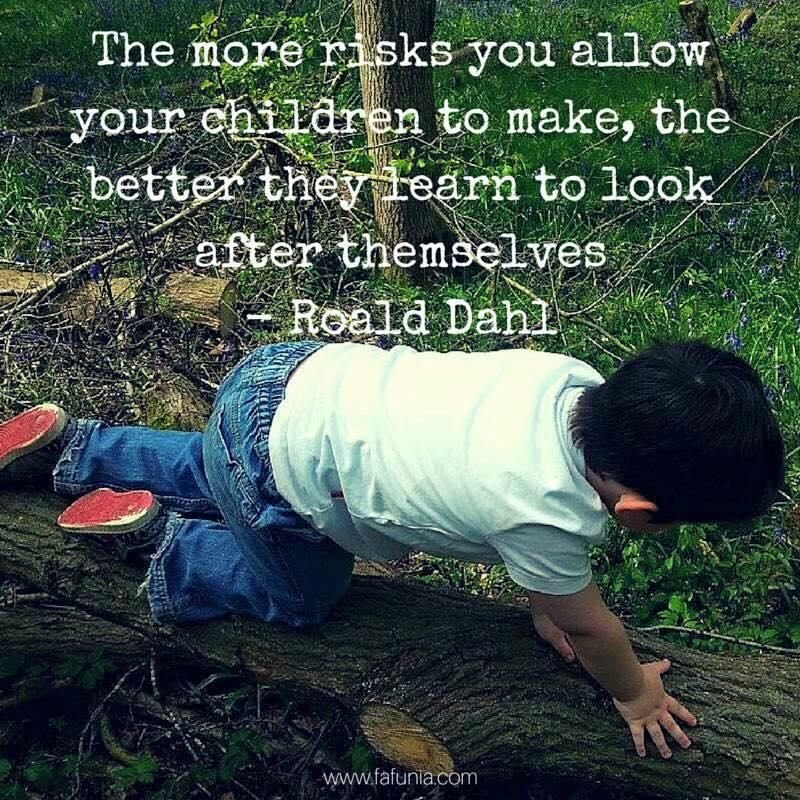
Your role isn’t to be a carpenter, carefully shaping your child into a predetermined form. Your role is to be a gardener: creating a rich, safe environment where your child can explore, take risks, make messes, and conduct their essential experiments on the world.
So the next time your toddler seems distracted, destructive, or delightfully chaotic, remember: they’re not falling behind. They’re thinking in ways that the most sophisticated AI on Earth still cannot replicate.
References
Gopnik, A. (2016). The gardener and the carpenter: What the new science of child development tells us about the relationship between parents and children. Farrar, Straus and Giroux.
Gopnik, A., Meltzoff, A. N., & Kuhl, P. K. (1999). The scientist in the crib: Minds, brains, and how children learn. William Morrow & Company.
Gopnik, A. (2011, July). What do babies think? [Video]. TED Conferences. https://www.ted.com/talks/alison_gopnik_what_do_babies_think